Close
Close


Your shopping basket is empty
We offer so much stuff that you can't choose? :-)
Contact us, We will be happy to advise you
Get to know tyrkenite up close in our encyclopedia, which you can view below by clicking Show more. ↓
Interested in something specific? Skip the text and jump straight to the topic Symbolism and healing properties, Suitable zodiac signs, Localities and history, What is the mineral used for and what can you make from it? or Connection with chakras.
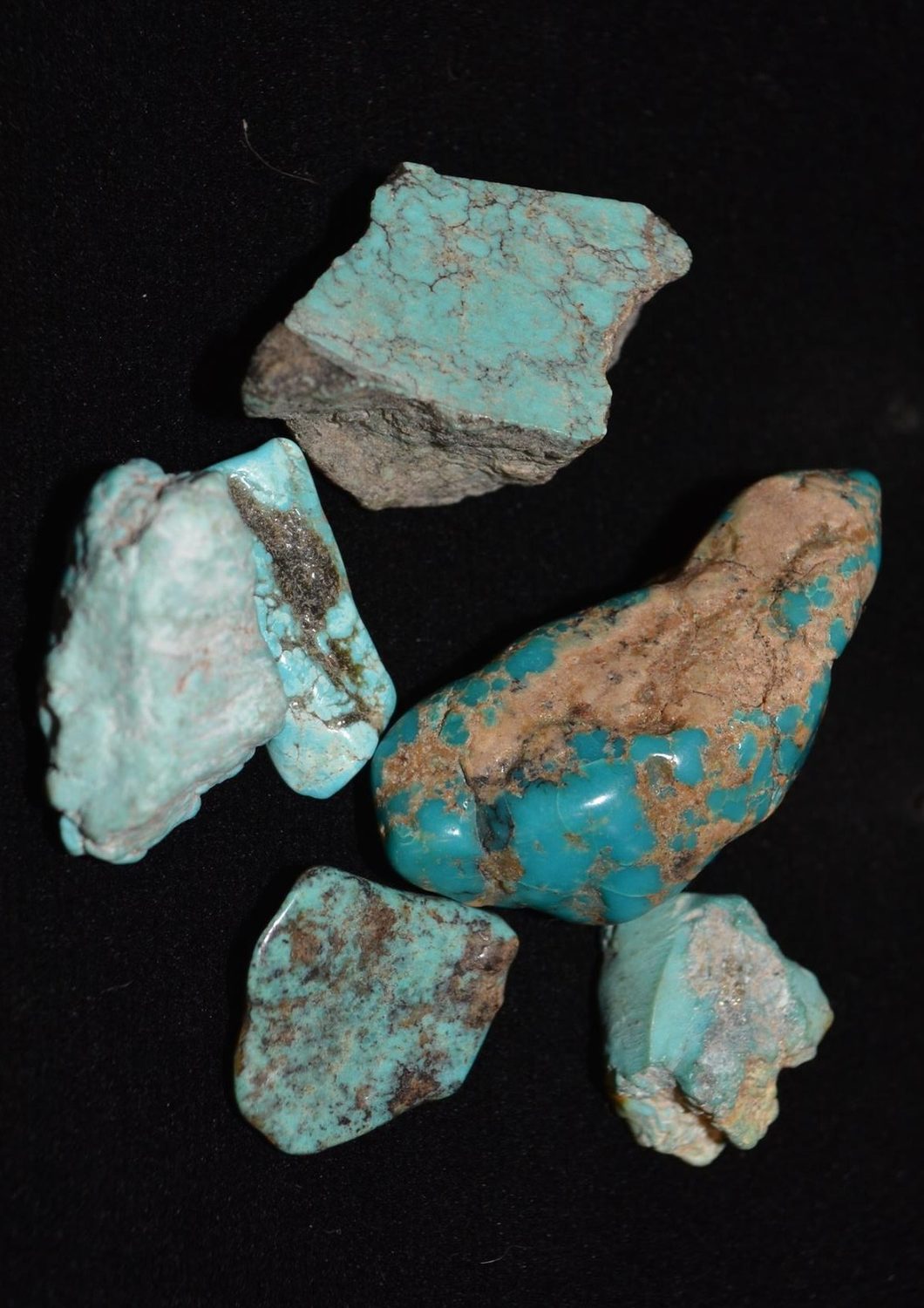
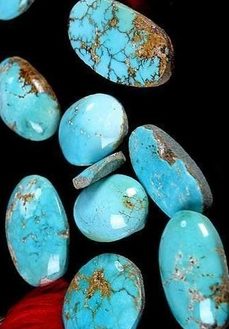
Tyrkenite (deep blue turquoise) is associated with courage and inspiration. Its colour tends to be blue-green. It often resembles a sea wave or forest greenery, though tyrkenite is also found in purple, copper, or multicoloured varieties in various shades. It is traditionally linked to Gaia, the Greek goddess of nature, earth and fertility. According to astrology, it reportedly strengthens its wearer's aura and creates a protective shield. It is said to have protective properties.
People also seek it out for its reportedly calming effect on the mind and its support for emotional stability. It is said to help overcome stress and anxiety. In alternative medicine, it reportedly aids meditation. It is also associated with spiritual growth, strengthening intuition, and connection with the higher Self. It reportedly supports creative energy and inspiration, and leads to new ideas. It is also often associated with boosting self-confidence and overcoming obstacles.
Sagittarius (23 Nov - 21 Dec), Aquarius (21 Jan - 20 Feb) and Cancer (22 Jun - 22 Jul)
Take a look at our encyclopedia of minerals by zodiac sign too and find out more here >>>
Tyrkenite is a fairly rare stone and is not easy to find. Genuine tyrkenite can be found in Turkey, Egypt, Iran and the USA.
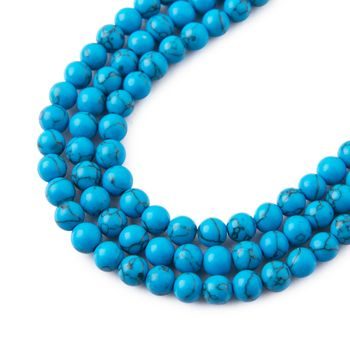
Synthetic tyrkenite, meaning tyrkenite of laboratory origin, is produced using a special ceramic process or other substances so that it resembles genuine tyrkenite as closely as possible. It is an artificial mineral made up of various pigments and minerals. These compounds are ground into a fine powder, mixed, and placed into a special mould exposed to high temperatures and pressures in a kiln. During this process, crystallisation and growth of the synthetic tyrkenite occur. Once this process is complete, the mould is gradually cooled to prevent cracking and other deformation of the mineral. Synthetic tyrkenite does not have the same properties and effects as the natural stone, but it looks very attractive as part of a piece of jewellery. On the Mohs hardness scale it corresponds to 5-6.
Tyrkenite takes its name from the Turkish word "türkiz", the location where this mineral was once discovered. For thousands of years, however, it was prized in Egypt as a precious stone used in jewellery-making, sculpture and rituals. According to the ancient Egyptians it reportedly had strong protective properties, which is why it was used to make amulets. The Persians and Arabs regarded it as a symbol of wealth. In the Middle Ages and the Renaissance, this mineral was often set into diadems, crowns and insignia.
According to folklore, tyrkenite was said to have the power to warn its wearer of approaching danger? It was believed that in the event of a threat it would change colour or lose its lustre, signalling that danger was near in the form of illness, betrayal or misfortune.
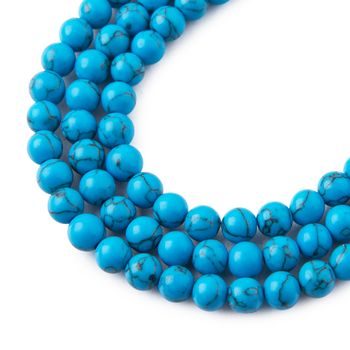
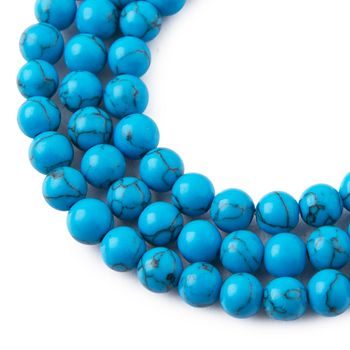
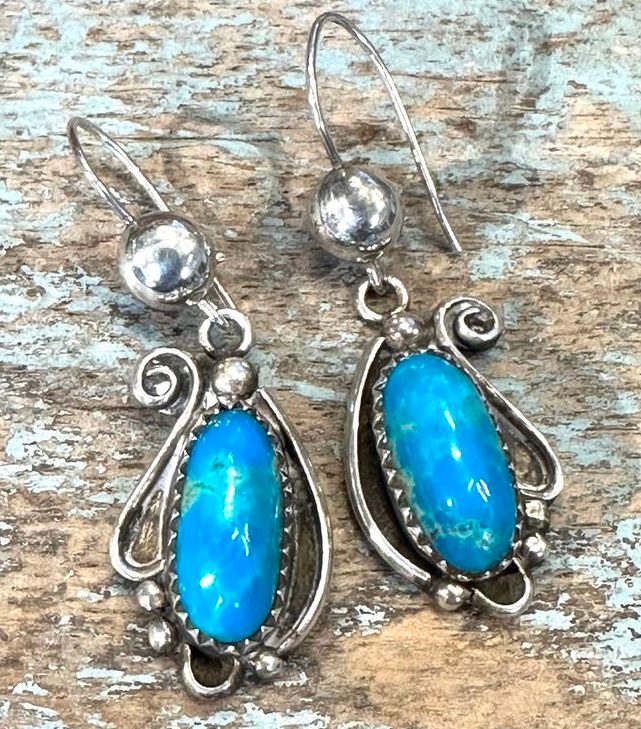
Because of its blue to green colour, tyrkenite is sometimes used in jewellery-making. It is most often made into beads, which are then used to create lovely necklaces and bracelets. It is sometimes also combined with pearls for a more interesting design. This mineral is also used to make earrings and rings, where it features either as the main stone or in combination with other gemstones. Brooches and clasps are equally popular. It is also used to make other objects, such as sculptures, vases, plates or small bowls. Painters use tyrkenite dust to create pigments for painting. It also finds use in stonemasonry work. Your imagination is the only limit.
Chakra 4 - the heart chakra, Anahata: affects the heart, associated with compassion and love
Chakra 5 - the throat chakra, Vishuddha: affects communication and self-expression
Take a look at our encyclopedia of minerals by chakra too and find out more here >>>
NOTICE: The information about the properties of precious stones and minerals found on all e-shops operated by Manumi Crafts s.r.o. is not intended for the diagnosis or treatment of any illness, and does not replace or serve as an alternative to conventional medical care. All information given about the potential properties of minerals is based solely on publicly available sources that cannot be factually verified. All precious stones and minerals in our range are intended solely for aesthetic and decorative purposes.



| In design | synthetic mineral |
| Size | 4 mm |
| Hole width | 0,7 mm |
| Product code | 49133 |
| In design | synthetic mineral |
| Size | 6 mm |
| Hole width | 1 mm |
| Product code | 49134 |
| In design | synthetic mineral |
| Size | 8 mm |
| Hole width | 1,1 mm |
| Product code | 49135 |
 Everything is in stock for immediate dispatch
 Affordable delivery to EU
 Traditional Czech glass quality
 Discounted price for larger packages