Close
Close


Your shopping basket is empty
We offer so much stuff that you can't choose? :-)
Contact us, We will be happy to advise you
Get to know rhodochrosite up close in our encyclopedia, which you can view below by clicking Show more. ↓
Looking for something specific? Skip ahead and go straight to the topic Symbolism and healing properties, Suitable zodiac signs, Localities and history, What is the mineral used for and what can you make from it? or Connection with chakras.
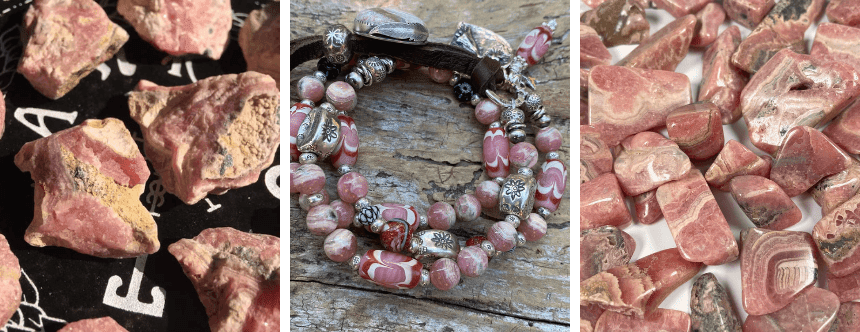
Rhodochrosite is often associated with love and openness of the heart. It reportedly has a harmonising effect. Its colour ranges from pink to reddish-brown, although this stone can also have an orange tint in lighter or more intense tones. It is traditionally associated with Aphrodite, the Greek goddess of love, passion and beauty. According to astrology it reportedly supports understanding in interpersonal relationships, as well as self-love and self-acceptance, which may help overcome inner conflicts and heal emotional wounds.
People also seek it out for its cleansing properties, as rhodochrosite is said to help cleanse the energy field of its wearer. It reportedly promotes a sense of stability and security, which may be beneficial in easing stress, anxiety and fears. It is also said to support intuition and creative thinking. It is often associated with removing negative energy from spaces.
Taurus (21 April – 21 May), Cancer (22 June – 22 July) and Leo (23 July – 22 August)
Also take a look at our encyclopedia of minerals by zodiac sign and find out more about them here >>>
The most significant localities of rhodochrosite include the USA, Argentina, Romania and South Africa.
In nature, rhodochrosite occurs in the form of crystals of various shapes and sizes, e.g. tabular, pyramidal or columnar forms, ranging from microscopic to larger sizes. Spots, veins, crusts and massive formations are also common. Natural rhodochrosite reportedly has very strong properties. On the Mohs scale, it has a hardness of 7.
The history of rhodochrosite is relatively recent, as this mineral was only discovered in the 19th century, and its history is linked to several significant events. Rhodochrosite was first discovered in 1819 in Sweden, where it was named after the colour of rose blossoms. In 1873 it was first recognised as a distinct mineral, and it gradually became a highly sought-after gemstone that attracted the interest of jewellers, collectors and gemstone dealers around the world.
rhodochrosite is not just the name of a mineral, but also of a fictional beetle living in an imaginary world? This beetle is described as a small, colourful creature with a bright blue body and golden stripes on its wings. It often appears in foreign children's storybooks as a symbol of beauty and rarity.
Rhodochrosite is a very popular stone in the jewellery industry. Due to its pink to red colour, it is often used to make necklaces and bracelets, where it is frequently combined with other stones, such as rose quartz, to create an interesting contrast. It is also often decorated with metal elements for an even more striking effect. Drop earrings or rings, both minimalist and more elaborate in design, also look very attractive. Brooches and clasps are also fairly often made from rhodochrosite.
People also love making protective talismans and amulets from rhodochrosite, which also make wonderful gifts. Equally popular are hair accessories such as combs, hair clips or hair ties. But your imagination knows no limits.
2nd chakra – sacral chakra Svadhisthana: reportedly affects sexuality and fertility
3rd chakra – solar plexus chakra Manipura: reportedly affects self-confidence and personal power
4th chakra – heart chakra Anahata: reportedly affects the heart area, associated with compassion and love
Also take a look at our encyclopedia of minerals by chakra and find out more about them here >>>
DISCLAIMER: The information on the properties of precious stones and minerals found on all e-shops operated by Manumi Crafts s.r.o. is not intended for the diagnosis or treatment of any illness, and does not replace or serve as an alternative to conventional medical care. All information provided about the potential properties of minerals is based solely on publicly available sources, which cannot be factually verified. All precious stones and minerals in our range are intended solely for aesthetic and decorative purposes.



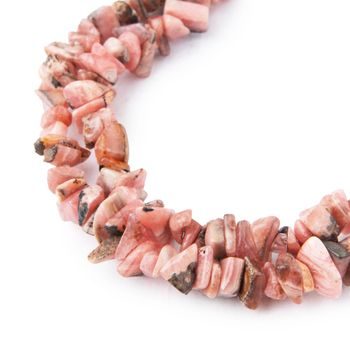
| In design | natural mineral |
| Size | 5 - 8 mm |
| Hole width | 1 mm |
| Product code | 48493 |
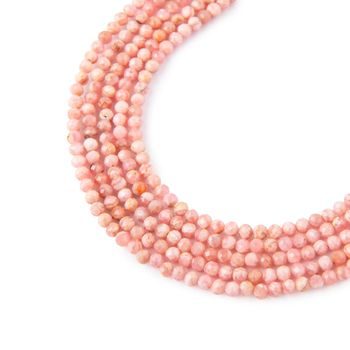
| In design | natural mineral |
| Size | 2 mm |
| Hole width | cca 0,4 - 0,6 mm |
| Product code | 49372 |
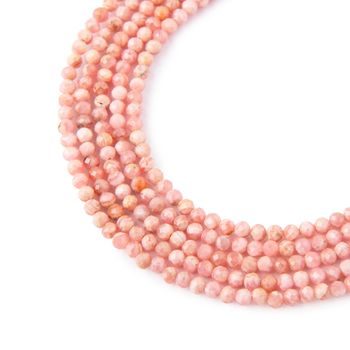
| In design | natural mineral |
| Size | 3 mm |
| Hole width | cca 0,5 - 0,7 mm |
| Product code | 49373 |
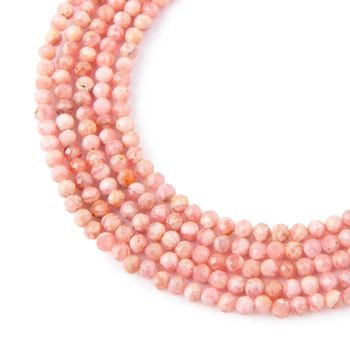
| In design | natural mineral |
| Size | 4 mm |
| Hole width | cca 0,8 - 1 mm |
| Product code | 49374 |
 Everything is in stock for immediate dispatch
 Affordable delivery to EU
 Traditional Czech glass quality
 Discounted price for larger packages